
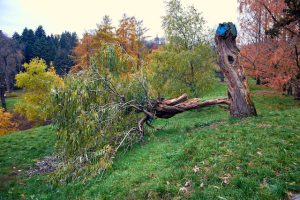
Recognizing the signs that your tree is a hazard before summer begins is crucial for protecting your family, home, and property’s value.
The arrival of summer typically brings thoughts of backyard barbecues or poolside lounging, but for a lot of homeowners in storm-prone spaces, it also signals the beginning of high winds and unpredictable weather. While trees provide plenty of shade and curb appeal, a compromised tree could quickly turn from a landscape asset into a true liability. Recognizing the signs that your tree is a hazard before summer begins is crucial for protecting your family, home, and property’s value. At Harford Tree, we see the aftermath of summer storms each year. Usually, the damage could have been mitigated if the warning signs were caught a couple of weeks earlier. Identifying the key signs your tree is a hazard before a summer storm arrives will let you take proactive measures. Read on to learn more!
Hanging or Dead Branches
One of the most obvious indicators of a hazardous tree is the mere presence of deadwood. Large dead branches are usually known as “widow makers” since they can fall at any moment, even without the catalyst of a bad storm. When a tree is healthy, the branches are flexible and covered in bark. Dead branches are brittle, though. During a storm, the “sail effect” happens, when the canopy catches the wind like a sail, placing immense pressure on the structure. If that structure includes any decaying or dead limbs, they act as a weak link. Even a mild storm could snap a ten-foot dead branch, sending it crashing onto power lines and roofs.
Deep Cavities, Cracks, or Hollow Trunks
While a hollow tree may look charming in a book, it’s a structural disaster in a windstorm. A tree does not have to be solid all the way through to be safe, but there is a crucial ratio of sound wood to hollow space that has to be maintained to withstand any high-velocity winds. Cracks are more concerning, especially those that extend deep into a trunk or run vertically. A vertical crack could suggest that a tree is splitting in two. When summer gusts hit, these cracks are like fault lines, leading to catastrophic failure where a tree splits down the middle. This is why having certified arborists inspect your trees annually is important; they could use specialized tools to determine if a trunk’s core is still structurally sound.
Tree Care and Maintenance from Harford Tree
Ready to have the beautiful yard you have always dreamed of? Harford Tree Experts & Landscaping, Inc has been in the business for decades, providing customers with quality work and quick responses all at the right price. We service the areas of Harford County, Baltimore County, and Baltimore City areas including Bel Air, Fallston, Perry Hall, Towson, Essex, Parkville, White Marsh and Middle River.
For service during business hours, reach out to us or give us a call at 410-592-7321. We offer 24/7 emergency service as well, just give us a call at 443-250-6649. For updates about our business and more informative tips, follow us on Facebook and Twitter.