
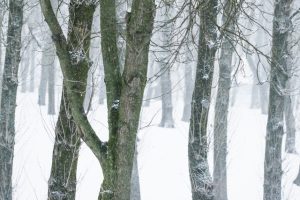
Trees are susceptible to winter root damage during the winter, even with no snow.
With winter weather in full swing right now, you might be wondering, “What protects tree roots in the winter when there isn’t any snow?” While trees are mostly dormant in winter, there is much more going on underground. Despite bare branches typically signifying a lack of activity, roots keep working to nourish the trees, enabling them to flourish during the growing season. Trees are susceptible to winter root damage during this time, especially when there is little snow on the ground. As the climate shifts, many regions are experiencing snowless Decembers. Specialized snowless winter tree care measures can decrease the risk of harming tree roots during this delicate time. Read on to learn more!
How Does Snow Protect Your Tree Roots?
Snow is a natural insulator, trapping heat and protecting soil from sudden freezes. Even a few inches of snow can keep soil temperatures stable around the root zones. Without snow, bare soil loses heat quickly. There is an increased risk of freeze-thaw cycles as well as dehydration, which can affect a tree’s growth during the spring.
What Happens to Your Roots in Bare Soil?
Roots less than 12 inches below ground are considered shallow and are a lot more susceptible to root damage from chilly weather, especially in young and newly planted trees. Roots exposed to extreme cold temperatures without insulation could result in cell damage, reduced nutrient uptake in the spring, and desiccation. The freeze-thaw cycle could also cause damage. Roots can not replenish lost moisture once the soil is frozen and the air is dry, and sudden warm-ups could trigger early root activity. If there is no re-freeze, it could cause root disease and root damage.
Signs of Winter Root Damage
Signs of root damage during cold weather might sometimes not be apparent until the spring. Keep an eye out for these conditions as winter goes by and comes to a close:
- Wilting and browned evergreen foliage is a clear sign of winter burn from root dehydration.
- Small and delayed leaf-out in the spring.
- Sparse or stunted foliage growth.
- Dieback typically in the top of the tree’s crown.
- Discolored and mushy roots appearing during an inspection from the professionals at Harford Tree.
Tree Care and Maintenance from Harford Tree
Ready to have the beautiful yard you have always dreamed of? Harford Tree Experts & Landscaping, Inc has been in the business for decades, providing customers with quality work and quick responses all at the right price. We service the areas of Harford County, Baltimore County, and Baltimore City areas including Bel Air, Fallston, Perry Hall, Towson, Essex, Parkville, White Marsh and Middle River.
For service during business hours, reach out to us or give us a call at 410-592-7321. We offer 24/7 emergency service as well, just give us a call at 443-250-6649. For updates about our business and more informative tips, follow us on Facebook and Twitter.